Our goal is to inform, inspire, and entertain.
BrightCity Books provides a full range of editorial services, including writing, editing, design, and publishing. We specialize in literature and nonfiction books about art, design, and culture.

We Wanted To Be Writers:
Life, Love, And Literature At The Iowa Writers’ Workshop
By Eric Olsen and Glenn Schaeffer, with an intro by Bill Manhire
In the interviews that comprise We Wanted to be Writers, Glenn Schaeffer and Eric Olsen and nearly 30 of their fellow Iowa workshoppers, among them Jane Smiley, John Irving, Sandra Cisneros, and T.C. Boyle, discuss what they learned in the Workshop back in the mid-‘70s — and what they didn’t learn, but wish they had — and what they’ve learned in the decades since about life, art, the creative process, the lit biz, and much more. Their goal is to provide advice and counsel and analysis, maybe some inspiration, and a cautionary tale or two. Along the way, they also hope to entertain with some good yarns and a little gossip….

Stagnant Water and Other Poems
By Wen Yiduo
Translated by Robert Hammond Dorsett
Foreword by Christopher Merrill
Calligraphy by Huang Xiang
Writing in the early 20th Century following the collapse of the Qing Dynasty, a time of particular artistic and political ferment, Wen was one of the first poets in China to write his poems in the vernacular, rather than in a highly stylized and inaccessible academic diction. He argued that in the composition of poetry “colloquial language must undergo a process of selection and tempering.” The same transformation marks this collection of Wen Yiduo’s poems—there is music everywhere, even in a ditch filled with stagnant water.
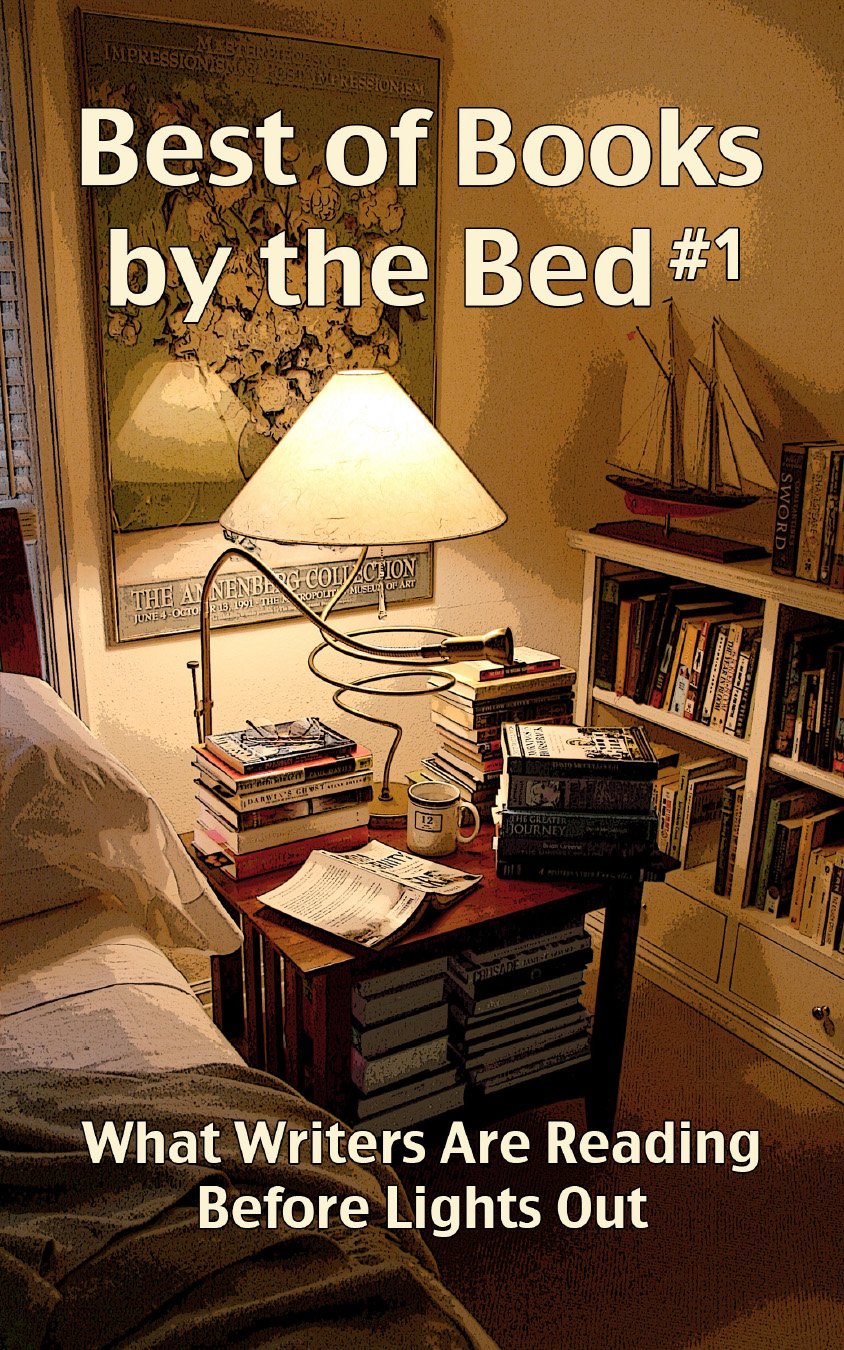
Best of Books by the Bed #1
Edited by Cheryl Olsen and Eric Olsen
BrightCity Books, 2013
Whether they cover every inch of shelf space and every available flat surface or reside pristinely in an e-reader, books by the bed are the constant — and ever-changing — companions of avid readers. They’re special, different from the tomes of daylight, flirtatious, fun, provocative friends we array within easy reach, our last contacts with the conscious world before we surrender to sleep, perchance to dream, and perchance to dream about what we just read….

Best of Books by the Bed #2
Edited by Cheryl Olsen and Eric Olsen
BrightCity Books, 2014
Best of Books by the Bed #2 includes the contributions of 28 writers, “snapshots” of what they were reading at the time they first posted, plus books by the bed that they intended to read next — more than 250 books, more fiction than nonfiction this time, compared with the first edition, and about the same amount of poetry.

Best of Books by the Bed #3
Edited by Cheryl Olsen and Eric Olsen
BrightCity Books, 2015
A common theme runs through the 28 contributions in this third volume of our Best of Books by the Bed collection, and that theme is mess. Besides discussing the books they’re currently reading at night before dropping off to sleep, or books they’re planning to read next, or books they have read but haven’t quite gotten around to putting away, a rather intriguing number of our contributors to this edition also talk about the mess of books by their beds, starting with Dale Bridges and his “tome towers,” “disjointed Jenga-like constructions that appear stable but crash to the floor if you look at them funny.”
It is good to have interesting books around, books one intends to read at some point, such intention somehow giving shape and substance to an otherwise vague future. And it’s hard to shake the feeling that something in books stacked nearby, especially good books, seeps out while we sleep, and may have a beneficial impact on one’s own writing, and no matter what a mess the books might be.

Yiquan and the Nature of Energy
By Fong Ha
Yiquan and the Nature of Energy, first published in 1998, was one of the first books in English on Yiquan and the internal martial arts, and has remained one of the best introductions to Yiquan available. This newly revised and expanded edition includes a discussion of the history and philosophy underlying the practice, plus a complete, illustrated step-by-step guide to zhanzhuang, the standing postures that are the foundation of Yiquan and all other internal martial arts.
Lapidus/Fontainebleau
Essay by Dave Hickey
Edited by Eric Olsen
BrightCity Books, 2018 Fourth edition
In the 60-plus years since its unveiling, Fontainebleau has attained the iconic status due its innovative design. Lapidus/Fontainebleau briefly chronicles the development of its architect, Morris Lapidus, and what he — and everyone else — considered his masterpiece. With nods from Frank Lloyd Wright, Frank Gehry, and most recently Ai Weiwei, Lapidus has claimed his rightful place among the world’s most original and influential designers. With humor, intelligence, and a deep understanding of the psychology of color and form, he created not only spaces, but experiences for those fortunate enough to inhabit them.

Vegas 360
Photographs by Thomas R. Schiff
Introduction by Dave Hickey
Tom has explored various photographic formats for forty years, the last 25 of them with panoramic cameras. In the introduction to Vegas 360°, Schiff’s fourth collection of panoramic photographs, art and culture critic Dave Hickey declares his images “a gift to us all . . .” that reveal the 360° design logic that is “otherwise available to none but dizzy drunks and dervishes.”

In Search of My Homeland — A Memoir of a Chinese Labor Camp
ByErTai Gao
A riveting chronicle of political persecution in China by the noted writer, artist, and dissident, ErTai Gao. Written originally on small scraps paper, sewn inside his prison clothes, and smuggled out past the guards at the risk of his own life, Gao provides an intimate account of the labor camps and the political machinations that led to them, as China spiraled into a dystopia under Mao. Gao’s words, still repressed and censored today, are given here as free and open as he wrote them.
Eric Olsen, Glenn Schaeffer, and the art and culture critic Dave Hickey incorporated BrightCity Books in 2006. We were somewhat decentralized at the time…